If you are running an ecommerce business or physical retail store and want to source products from China — but have zero experience with the world's largest manufacturing hub — this guide is built for you. Sourcing from China can drastically lower your product costs and boost profit margins, but it comes with real risks: unreliable suppliers, hidden fees, shipping delays, and costly customs mistakes.
This article is rooted in real on-the-ground experience and feedback from buyers like you, covering four aspects you actually need to master: where to find your products, how to avoid the hidden traps, smart procurement tactics, and how to get your goods home safely.
We update it regularly, and we'd love to hear your own tips or stories in the comments.

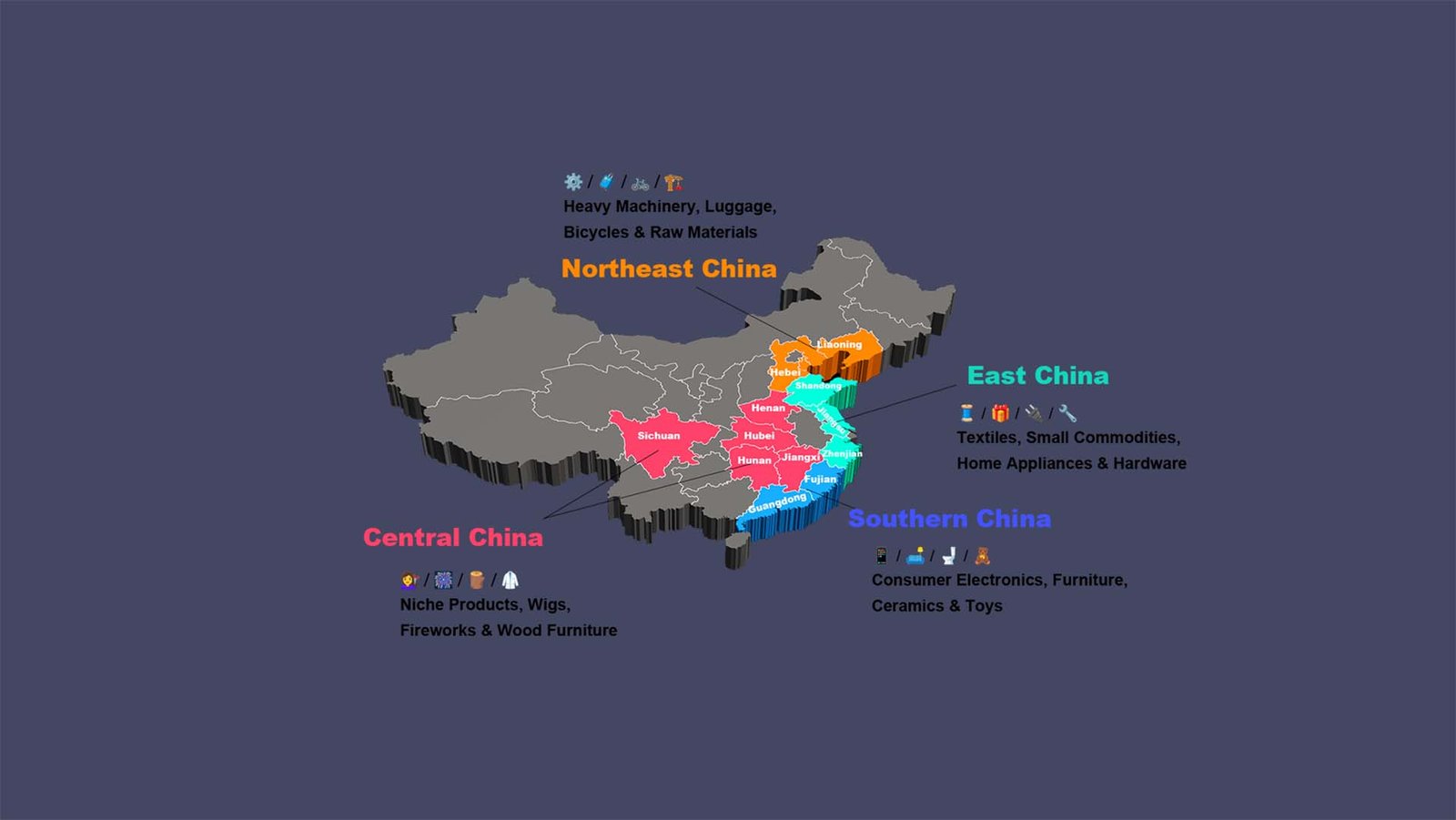
The number one rule of profitable China sourcing is simple: buy directly from the region that specializes in your product. China's manufacturing industry is organized into highly specialized factory clusters spread thousands of miles apart, and each region dominates a specific product category.
Sourcing from the correct industrial hub gets you lower unit prices, faster production turnaround, and access to more skilled, experienced suppliers. Even if you use B2B platforms like Alibaba or Global Sources, you can use a supplier's shipping location as a quick filter to prioritize genuine, cluster-based factories over middlemen.
China's industrial belts can be roughly divided into four sections:
To build your full mental map of China's production belts, read our deep dive: China's Sourcing Map: Where is China's Factory Clusters & Industrial Hub. It breaks down every major hub by product type, so you know exactly where to focus your search.
Finding suppliers online takes 10 seconds — finding trustworthy, honest suppliers is the hard part. Many new buyers lose money, waste months of time, or even damage their brand reputation to fully avoidable mistakes. Some traps are easy to spot, but others are so well hidden you won't notice until your goods are already late or your budget is blown.
We've put together dedicated guides to the most common risks you'll face:
Beyond avoiding pitfalls, a few simple, repeatable habits will make your entire sourcing process smoother, faster, and more reliable. From requesting quotes and verifying a supplier's legitimacy to the final delivery stage, I've put together some highly practical tips—including downloadable email templates.
Even the perfect order at the perfect price is worthless, if it gets stuck at customs, arrives damaged, or costs more to ship than the product itself. Logistics is the final — and most make-or-break — step of sourcing from China.
A lot of buyers let the factory handle shipping out of convenience. If it's a tiny sample batch, that's totally fine. But if you're moving volume or dealing with complex product types, your factory isn't necessarily a logistics expert.
My advice? Find an independent freight forwarder located near the port where your goods are shipping out, they offer factory pickup, handle customs, sort out proper HS codes, and can often bundle shipments from multiple factories for a lower rate than what the factory quotes you.
Quick rule of thumb for transport modes(Take shipping from China to the US as an example):
Reach out to verified suppliers on top B2B platforms, and confirm they are real factories by checking business licenses, requesting workshop footage or booking third-party on-site audits.
Alternatively, partner with a trusted sourcing agent with pre-vetted factory networks to handle negotiation, quality control and logistics on your behalf.
Always order samples and formalize all terms before placing bulk orders.
Follow these essential steps to find the right manufacturing partner:



Leave a Reply