While a sleek Chinese business license from an Alibaba or Made-in-China supplier looks convincing, a standalone PDF proves very little. In cross-border trade, licenses are often photoshopped, borrowed, or tied to dissolved companies. Truly verifying a Chinese supplier requires cross-referencing their credentials against official government registries. This step-by-step guide covers how to read a Chinese business license, verify it via official corporate databases, and use tools like Qichacha and Tianyancha to ensure your partner is legitimate.
Business license verification is part of our comprehensive China sourcing tips. Learn more here.
For more guidance on how to avoid pitfalls when sourcing in China, click "avoid pitfalls"; for additional sourcing tips, click "sourcing tips."
Before you begin searching online databases, you must understand what information a paper or digital business license contains.
While Chinese licenses were standardized across the country into a unified paper format, all text is written entirely in Simplified Chinese. Here are the 5 key fields you must identify and translate.
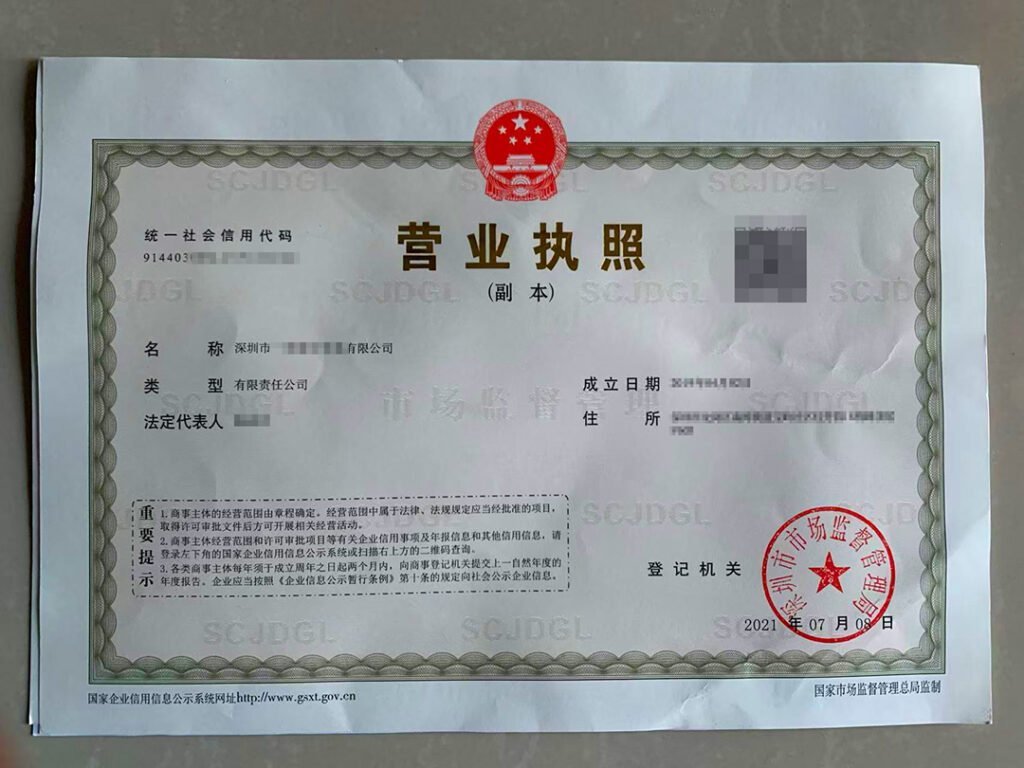
1. Unified Social Credit Code
This is an 18-digit alphanumeric code assigned to every legally registered business entity in mainland China. It acts as the company's official corporate tax and legal ID number. This 18-digit code is the single most important piece of data you need to perform an online verification.
2. Legal Company Name
In mainland China, only the Chinese legal name has binding legal authority. English company names (such as "Shenzhen Apex Electronics Co., Ltd.") are informal translations used for marketing and foreign trade invoices. They do not appear on official government registration records.
3. Company Type
This field indicates the corporate structure—most commonly Limited Liability Company (有限责任公司) or Sole Proprietorship.
4. Registered Address
The official legal address registered with the local Administration for Market Regulation (AMR). Pay close attention to whether the address points to a high-rise commercial office suite or an industrial park/manufacturing zone.
5. Business Scope
A detailed list of business activities the company is legally authorized to conduct. This field explicitly delineates whether a company is authorized to manufacture/process goods or merely sell/distribute them.
To verify a business license, you must ask your sales point-of-contact for two specific details before placing a sample or production order:
Pro Tip for Foreign Buyers:
If a supplier refuses to provide their 18-digit Unified Social Credit Code or Chinese legal name, claiming it is "confidential," treat this as an immediate red flag. Publicly registered corporate details in China are legally required to be accessible to the public.
Once you have the 18-digit USCC or the Chinese legal name, you are ready to check official records.
The Chinese central government operates the official corporate registry known as the National Enterprise Credit Information Publicity System (GSXT).
Verify chinese company online Official Website: https://www.gsxt.gov.cn
How to Conduct a Search on GSXT:
1. Access www.gsxt.gov.cn using a web browser with translation extensions (such as Google Translate).
2. Copy and paste the 18-digit USCC into the main search box on the homepage.
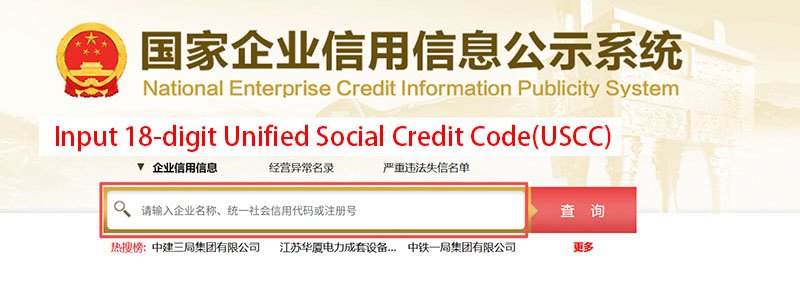
3. Complete the Chinese character CAPTCHA verification puzzle.
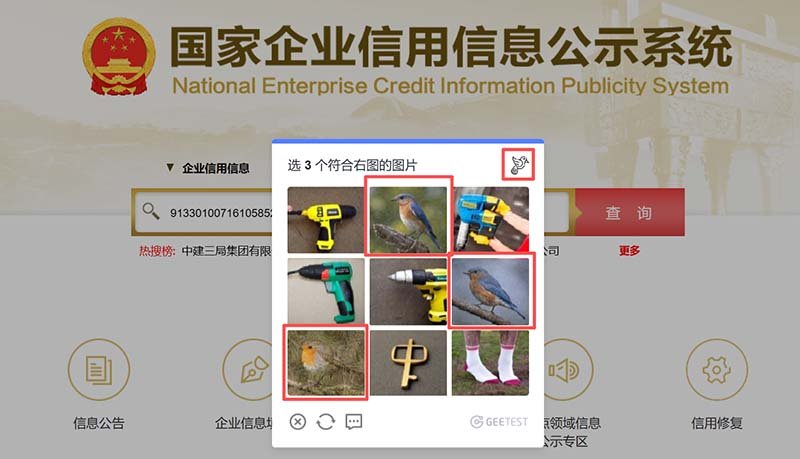
4. Review the returned corporate profile.
What to Verify on GSXT:
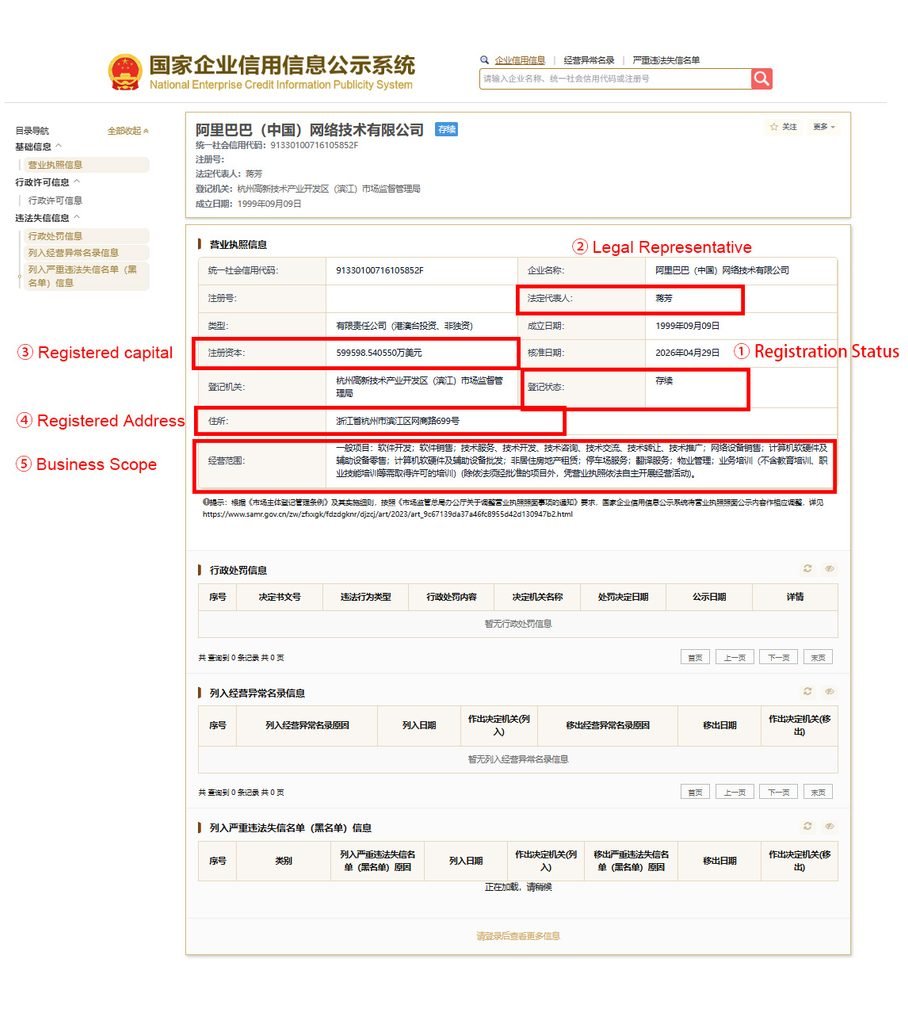
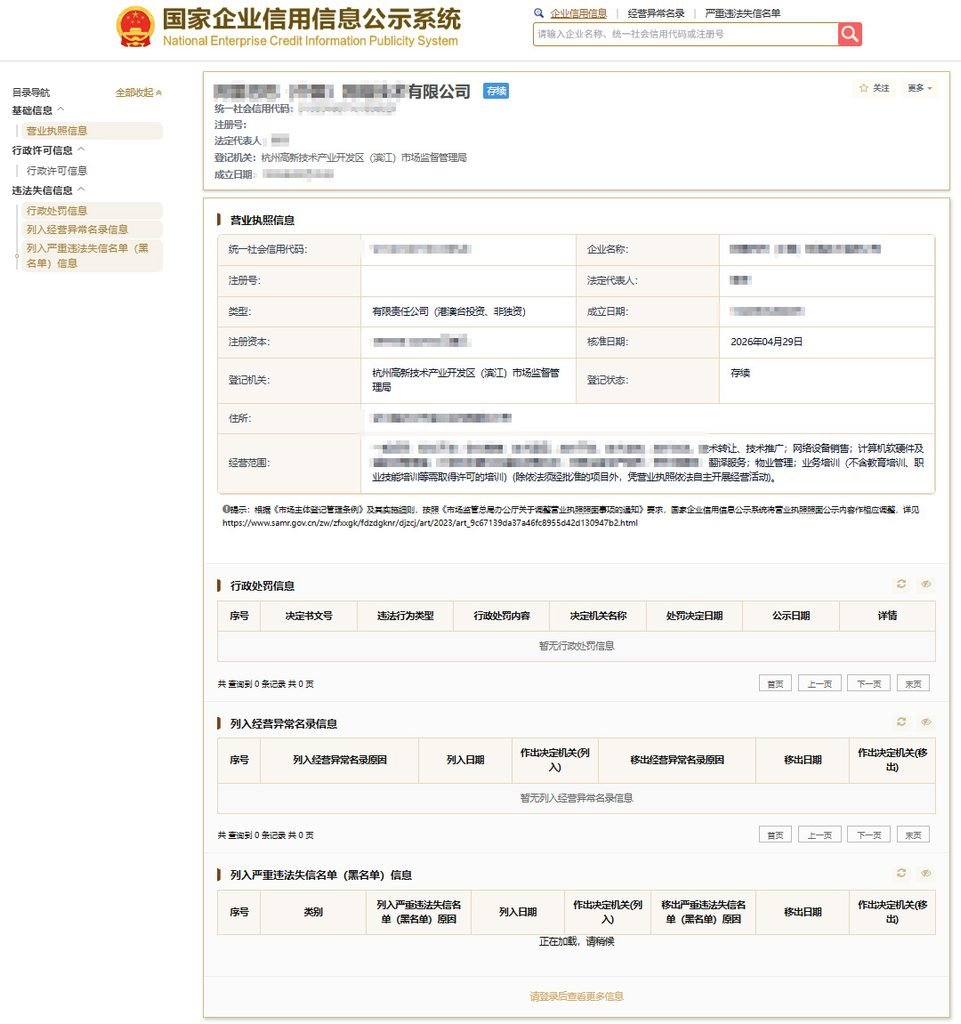
Match Check: Compare every single field returned on GSXT against the PDF business license provided by your supplier. If the registered capital, business scope, or address on the PDF differs from the GSXT database, the PDF has likely been edited or forged.
Operational Reality Warning: The official GSXT portal is notoriously slow, frequently blocks overseas IP addresses, and utilizes complex Chinese-character interactive CAPTCHAs that can be nearly impossible for non-native speakers to solve. Because of this, industry experts rely on commercial database platforms.
In China, corporate intelligence platforms like Tianyancha (tianyancha.com) and Qichacha (qcc.com, QR scan required — not recommended) pull data directly from government registries while layering on historical litigation, customs registration, intellectual property, and operational risk records.
These platforms offer a far more comprehensive picture of a company’s financial and legal health than the basic government lookup.
Step-by-Step Workflow for Using Qichacha or Tianyancha:
1. Open the Platform and Enable Browser Translation
Navigate to https://www.tianyancha.com. (Right-click anywhere on the page and select "Translate to English" using Google Chrome for convenience).
2. Input the USCC or Chinese Company Name
Paste the 18-digit USCC or Chinese company name into the prominent central search bar and press Search.
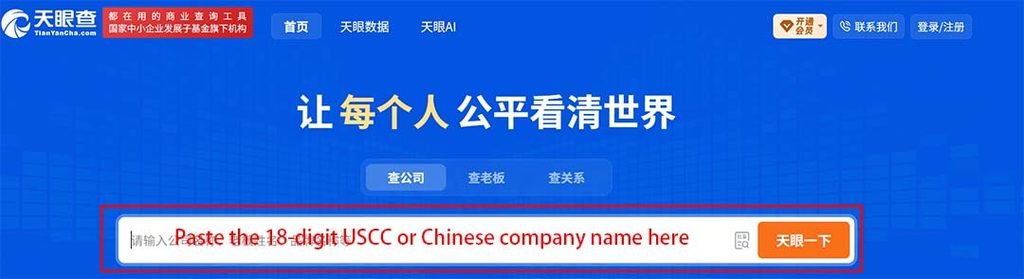
3. Inspect the Company Header Profile
Look at the top section of the generated corporate profile:
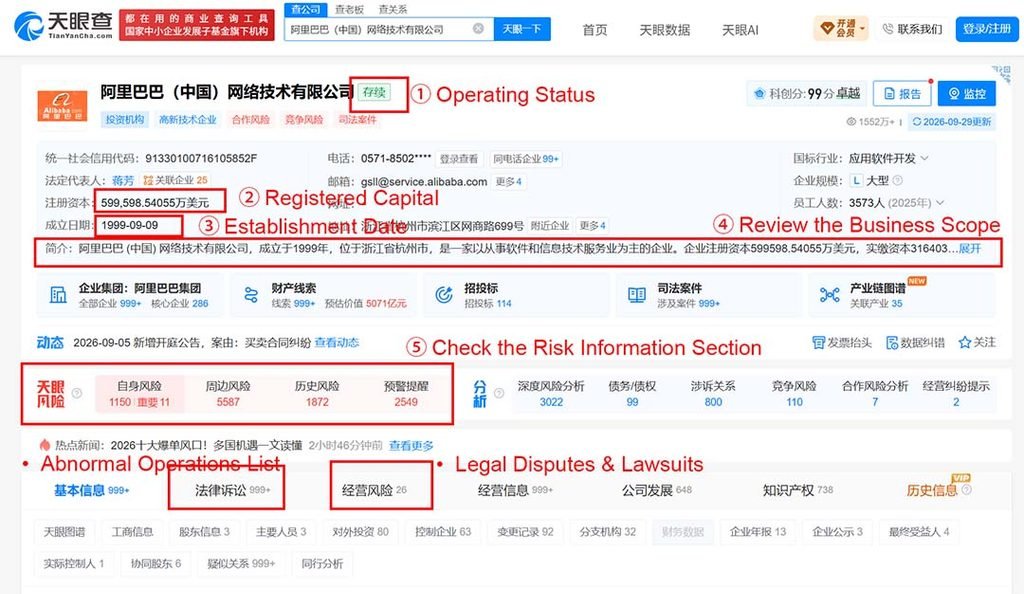
4. Review the Business Scope for Manufacturing Verbs
Scroll down to the Business Scope section and run a targeted text check for specific verbs:
5. Check the Risk Information Section
Third-party platforms aggregate public court rulings and administrative penalties. Check the following sub-tabs:
When cross-referencing your supplier's documents with online databases, watch out for these critical red flags:
While online license verification is an essential first step in supply chain risk mitigation, it is important to recognize its inherent limitations:
Online lookup confirms that a legal entity exists; it does not guarantee that your specific order will be manufactured correctly.
Verifying a Chinese business license via official registries like GSXT and intelligence platforms like Qichacha or Tianyancha is the most effective way to weed out low-level scammers and unmask middlemen pretending to be direct manufacturers. Before transferring deposits overseas, always demand the 18-digit Unified Social Credit Code and cross-reference every detail independently.
If lookup feels too complex, or you cannot access the site above due to Great Firewall of China, click the button below to contact GoJason.
Yes. You can verify any registered Chinese enterprise for free on China’s official GSXT system (National Enterprise Credit Information Publicity System).
Please note that foreign buyers usually need a VPN to access the GSXT portal outside China. While you can use Google Translate or similar software to browse the site, translations aren't always 100% accurate or reliable for legally binding terms. For critical orders, cross-checking key details with a local expert ensures you don't misinterpret vital legal records.
Legitimate Chinese companies process commercial transactions through official corporate accounts, ensuring legal protection, formal tax invoices, and clear trade recourse.
While paying into a personal account can reduce costs for small-scale orders or established partners where strong mutual trust exists, it shifts your safety net from legal protection to personal trust. For new or high-value orders, private transfers leave you vulnerable to fraud, customs delays, and zero legal leverage under Chinese corporate law.
No. A business license only proves legal registration—it does not guarantee manufacturing capacity, product quality, or on-time delivery.
To minimize risk, always start with sample evaluations and a small sample or test order (trial run) before committing to mass production. Combining initial trial orders with on-site factory audits and pre-shipment quality inspections (QC) is the most reliable way to ensure your goods meet standards before leaving China.
A real factory handles direct production, owning the machinery and assembly lines. A trading company acts as a supply chain partner—sourcing products across multiple suppliers, handling communication, managing QC, and consolidating logistics.
Neither is inherently "better": factories offer lower unit costs for high-volume, standardized orders, while a reliable, high-integrity trading company is often the best choice for small-to-medium buyers. A great trading agent eliminates language barriers, bridges cultural gaps, and manages local factory friction so you don't have to deal with complex ground-level execution yourself.
Verifying a Chinese business license—as detailed in this article—is the absolute foundational step to confirm if a company is legally registered. However, a complete legitimacy check requires multi-layered verification:




Leave a Reply